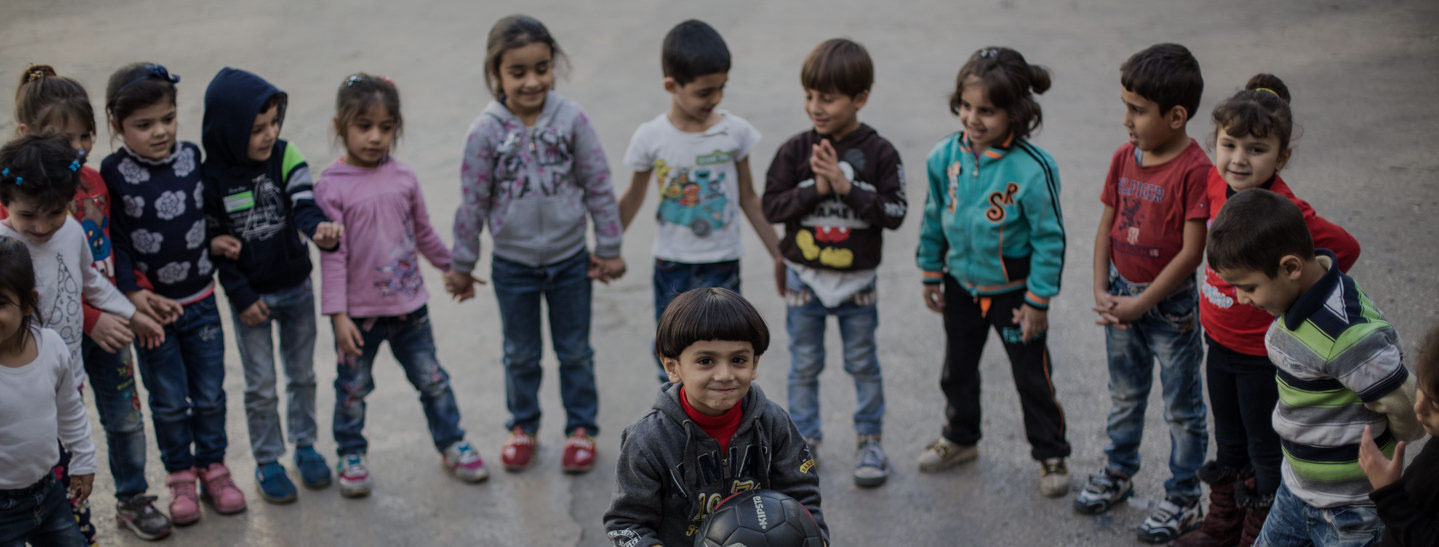
Children’s playgroups as opportunities for socialization and integration
30 August 2026|JRS Croatia
When a person is forced to leave their home in search of safety and more dignified living conditions, some have to make that journey alone, leaving their families behind, while others set out together with their loved ones. In the latter case, the most vulnerable – children and the elderly – face particular difficulties, as a new environment, a new way of life and a new language do not meet their need for stability.
At our office, we have many opportunities to meet refugee children of different ages – from very young children and those of preschool age to schoolchildren, adolescents and others. None of them have come alone; they are accompanied by their parents. Their parents are fully occupied with securing a livelihood for their families in their new environment, while children have a vital need to meet and interact with their peers, something that is initially much more difficult because of the language barrier. As a result, such complex circumstances can often have a painful impact on children, particularly because of the vulnerability of their young age.
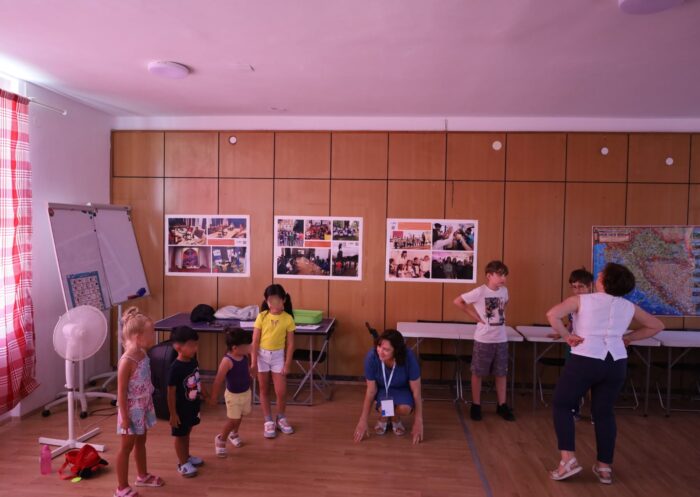
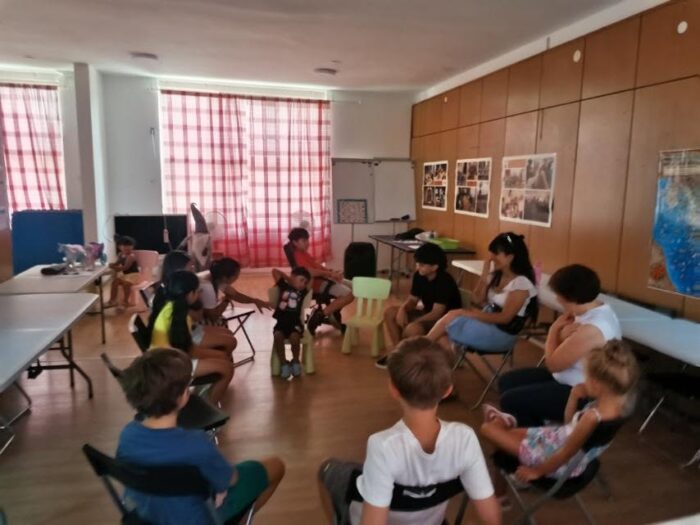
This is where the local community can greatly ease the burden on refugee parents, and there are many ways in which local initiatives can help refugee children navigate this phase of their lives in as healthy a way as possible. For our part, we do this by creating opportunities for refugee children to socialize. In this regard, it is worth mentioning the children’s playgroups, which have recently resumed at our premises. The difference now is that they are further supported by the presence of a psychotherapist, who has joined the animator. This means that the children’s activities and games also take place under the watchful eye of a professional, ensuring that play responds to the simple yet fundamental needs of the youngest children.
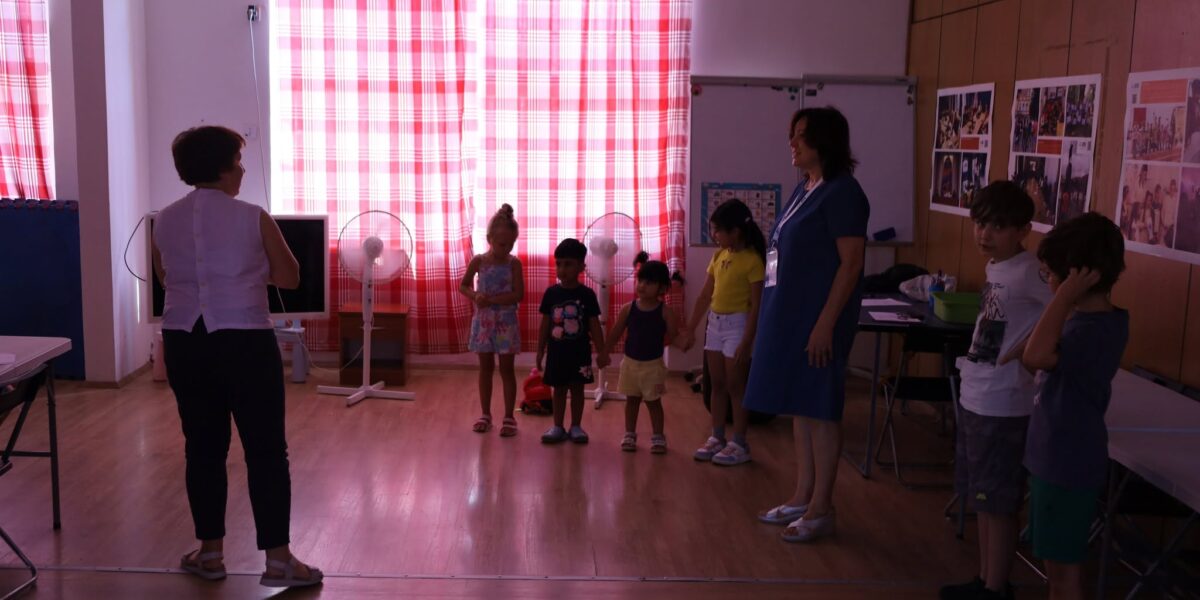
At the most recent gathering, children from Ukraine, Argentina and Russia came together, ranging in age from 3 to 11. Although providing suitable activities for such an age-diverse group is an extremely demanding task, the animator and psychotherapist were able not only to find activities that at different moments suited each child present, but also to bring all the children together as one group – not merely to entertain them, but to help them socialize. The children’s joy, as well as the satisfaction of their parents at seeing them in such a healthy and supportive environment, are clear signs that an initiative like this, by helping children build meaningful relationships with their peers, strengthens entire families.
Caring for a community means caring for its most vulnerable members, the youngest and the oldest. This is all the more important when we are speaking of people who have left their homes and are now trying to build new ones. In such circumstances, there are many ways in which we can help children grow up in a healthy and safe environment. It is in this context that Jesus’ well-known words take on a new and powerful meaning: “Whatever you did for one of the least of my brothers and sisters, you did for me.”