The Culture That Accompanies the Ordinary Person – “Harmony of Folk Heritage”
24 October 2026
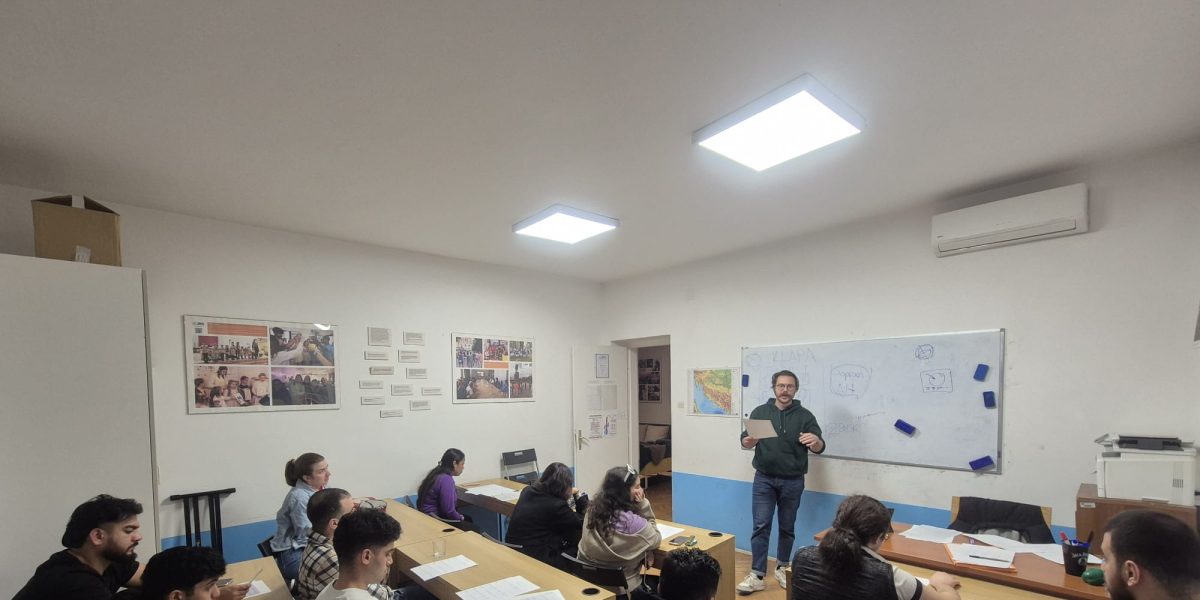
In our Croatian office, we believe that integration, as a process of taking root, must be thorough and systematic, but also – whenever possible – slow and caring. Because what enters without love comes out with bitterness. We want our beneficiaries to become full-fledged bearers and contributors to Croatian culture and society, but above all, we want them to want this themselves.
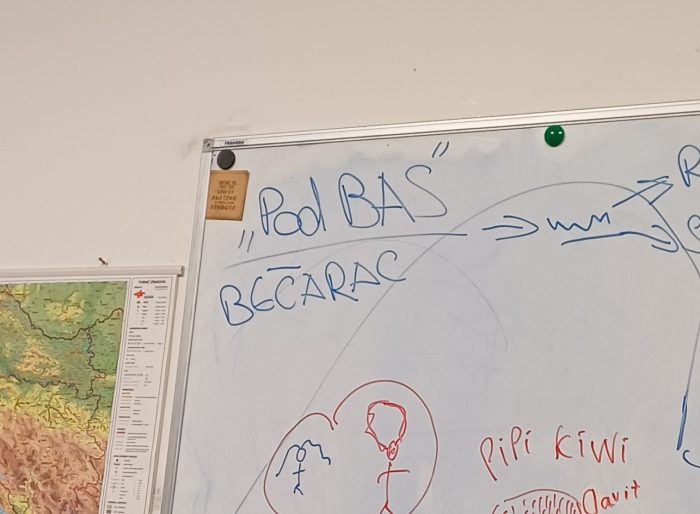
Language courses, workshops on migrants’ rights, training on job applications and CV writing, education on mental health – these are all important activities in which our beneficiaries participate hand in hand with Croatians. All of these are skills essential for making everyday life sustainable and effective.
Alongside all these fundamental needs of dignified living, which we strive wholeheartedly to meet, neither we nor our beneficiaries forget the need for beauty and refinement in their many forms. Thus, it is not uncommon for some of our meetings to be dedicated to visual arts, with painters, sculptors, designers, poets, journalists, and diplomats as guests, sharing with us and our beneficiaries stories from the rich treasury of their experiences.
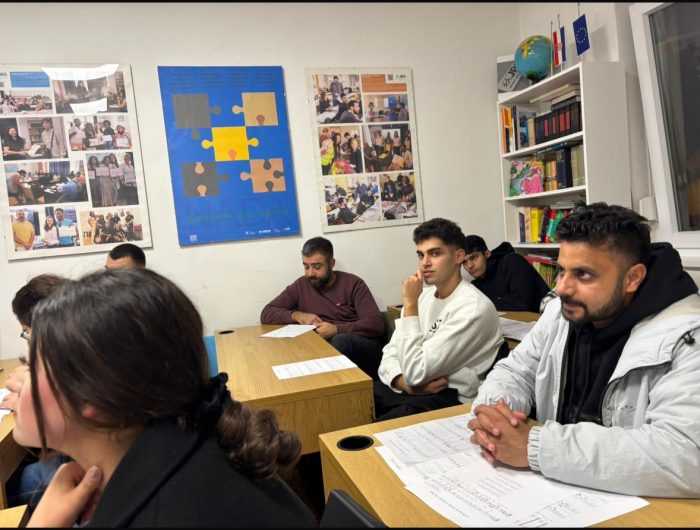
And yet, over the past few months, a special story has been unfolding and growing in our office – one in which everyone is enabled not merely to listen about the culture, but to actively “try it out.” This is the project Harmony of Folk Heritage, in which two collaborators and excellent connoisseurs of Croatian folklore, Magdalena and Goran, with great creativity and adaptability, teach all interested beneficiaries Croatian traditional songs and dances. The melodies and steps of Croatia’s colorful folk heritage are closer to some of our beneficiaries and more distant to others, but everyone, in their own way, strives to imitate them – together. As a result, these workshops often feature grandparents with children and teenagers, all following their successful and unsuccessful attempts with loud laughter.
 What they seek to master – these folk melodies and unrefined dance movements – hide within their simplicity a charm that allows those who know them to come into contact with what was created in Croatia by the small, historically unnoticed individual. With that ordinary fate, we believe, many of our beneficiaries can identify. In what this person created during moments of rest between jobs, they often wove their own inclinations, aspirations, and fears. In this light, the search for beauty becomes, at a given moment, a search for meaning that we feel the need to find in our own lives.
To be a bearer of a culture, therefore, above all means to be open to understanding the complexity of the personal heritage each of us carries – both those who originate from that culture and those who have found a new home within it. To be a bearer of a culture means being able to see universal human experiences behind individual identities – joy, pain, loneliness, togetherness, gratitude. To be a bearer of a culture also means teaching others to see the world in this way.